


Marian
🇬🇧 Great Britain

Start from absolute scratch
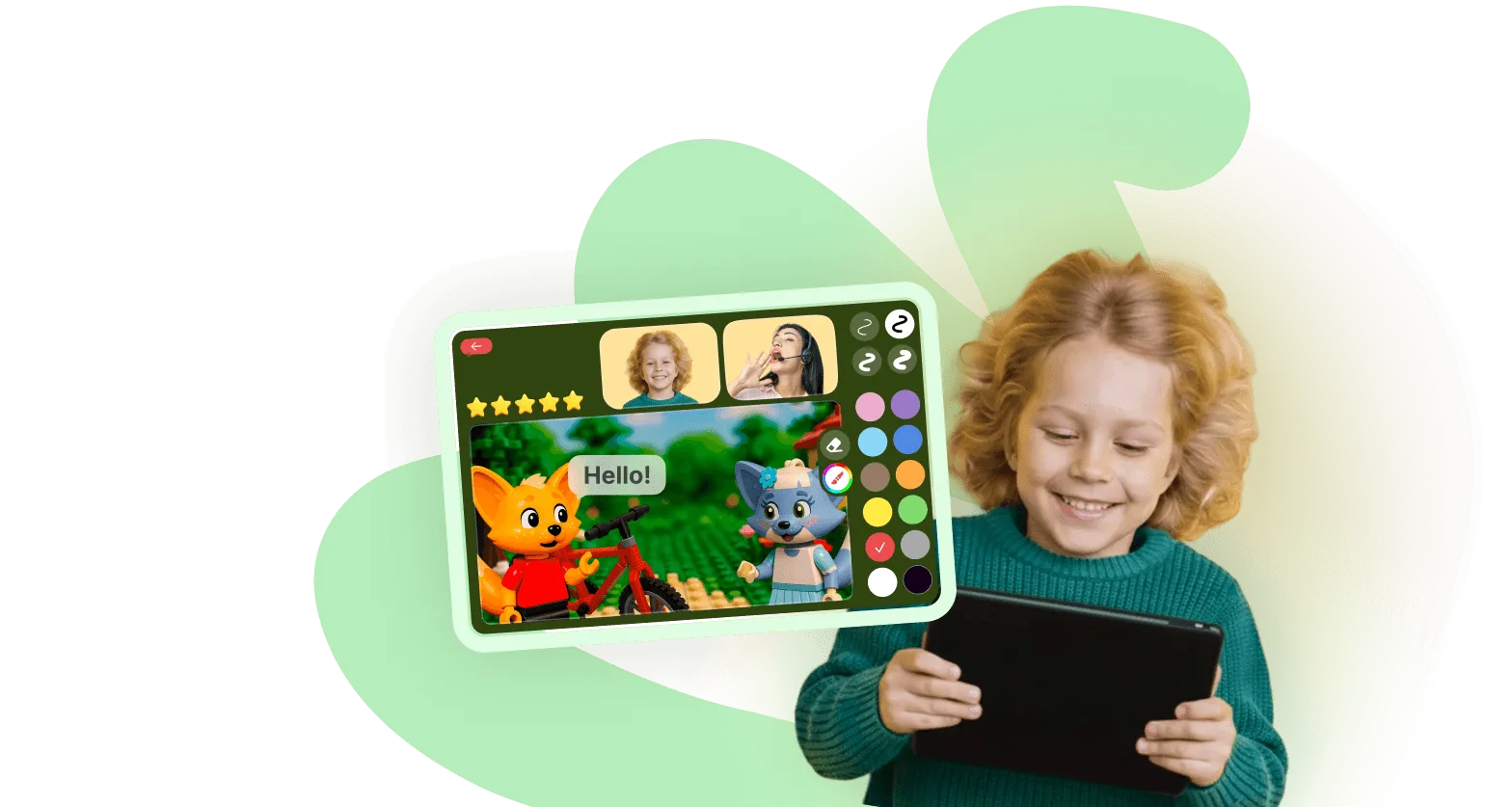
No prior English knowledge is required. The teacher explains through gestures, pictures, and games — the child understands the tasks and gradually begins answering independently.
Restlessness
The lesson lasts only 25 minutes, with frequent activity changes: songs, movement games, interactive screen tasks. The child doesn't have to sit still for long.
Shyness
Lessons are individual — no comparison with other children. The teacher praises every effort, while characters and games help them start speaking without fear of mistakes.
School preparation
The child gets used to listening to the teacher and following instructions. They enter school with their first English vocabulary and confidence in the new subject.
The teacher greets the child and the characters, setting a playful mood.
A song or movement game to recall words from the previous lesson.
A new topic introduced through pictures, gestures, and interactive tasks on the platform.
The child points, jumps, and searches for objects — reinforcing new words through action.
We review what was learned, praise achievements, and say goodbye until the next lesson.
 TPR (Total Physical Response) — learning through movement
The teacher says 'Jump!' or 'Touch your nose!', and the child performs the action. The word connects to movement, making it easier to remember without cramming or translation. Plus, energetic little ones find a great way to release their energy.
 Should you stay nearby?
At the trial lesson — yes. You will help with the tech and see the learning format.
 Do parents need to speak English?
No. The lesson is led by the teacher, and your role is simply to encourage and praise your child.
 Your child can't read yet?
No problem: at ages 4–6, we learn by ear — through pictures, songs, and movement.
 Which device to use?
A tablet, laptop, or computer with a webcam. A smartphone also works, but it is less convenient due to the screen size.
The child learns to distinguish English sounds and understand the teacher's speech. In class: listens to songs and follows commands like 'Show me red!'.

Frequent activity changes train concentration. In class: plays 'what's missing?', repeats sequences of movements.

Words from the lesson topic are reinforced through pictures and games. In class: the child finds objects at home and on screen, naming them in English.

First words and short phrases in response to questions. In class: responds to characters, repeats after the teacher, names objects.


20 words

12 words

11 words

8 words

12 words

9 words

16 words

8 words

12 words

8 words

12 words

12 words

20 words

8 words

The course is the preparatory Preschool stage in the All Right curriculum. It prepares children for the first level of the Cambridge Young Learners system — Pre A1 Starters — through play, listening, and speaking. After the course, your child will know basic vocabulary and everyday phrases, understand simple instructions, and participate in short dialogues. You track their progress in the teacher's post-lesson reports.
Between lessons, the child reinforces words through play: chats with peers in Speaking Clubs, plays in the All Right mobile app, and practices pronunciation with the animated Charlie AI tutor. This way, new words are reviewed more often — and the child starts using them actively, rather than just recognizing them.

Individual lessons
Learn more
International conversation clubs
Learn more
Conversation practice with Charlie the fox
Learn moreChoose a time that fits your daily routine: in the morning before kindergarten, after an afternoon nap, or in the evening. You can book each lesson individually or set up a recurring schedule.
Individual lesson
Individual lesson
Self practice
Individual lesson
Self practice
Self practice
Individual lesson
Self practice
Individual lesson
Self practice
Individual lesson
Self practice
The course lasts about 6 months with 2 lessons per week. Price starts from 8$ per lesson, depending on the package. Details on the 'Pricing' page.

Children learn English by completing story missions and creative tasks in the style of their favorite building blocks sets. The language is integrated into the game like bricks in a building block set. Perfect for children who love to build and fantasize.
Learn more
The child learns together with Charlie the fox and his friends in the virtual world of All Right. Each lesson is a real mini-adventure in English with characters, quests, and a storyline.
Learn moreThe course is fun and structured, with 25-minute lessons that keep kids engaged. All Right also updates parents on progress after each lesson.

The program is very flexible. The teacher is great. The lessons are very interactive and interesting for my child. He loves the English course very much. Thank you!
I like All Right for its variety of teachers and classes, and I enjoyed the free first lesson, which included a real evaluation and personalized plan.
We are using the All Right platform with our second child. Our eldest used it for about two years with great success. Highly recommend it ❤️
Competent teachers, engaging activities, and free speaking clubs with every lesson. Minecraft is fantastic for teaching English to my child!
My 4-year-old loves the lessons! I thought he was too young for online English, but the teacher keeps him engaged, and he's making great progress.
We're very pleased with teacher J. She is patient, adaptable, and always smiling. The lessons are colorful, interactive, and enjoyable.
My 4-year-old son has been taking English classes for a month now. The classes are well-paced, and he especially enjoys the interactive homework. We love All Right!
All the teachers are great, including Mrs. Varvara and all the teachers from the speaking club. They adapt their lessons to the student's age and interests.
The teacher gives my son 100% attention. The platform is great, easy to use, and allows character selection.
Zoi improved her grammar, completed two levels of the course, and moved on to a new one. I was looking for cheaper courses but didn’t find any worthy alternatives.

Very pleased with the school. The program is great, with homework and feedback. Irina is always in touch, offering advice on teaching my daughter outside of class.

Online Learning Essentials & Setup

Lesson Format and Duration

Starting and Child's Age

Individual vs Group Lessons

Shyness & Speaking Confidence
